Our work
Civic Education
Knowledge first. History, the Constitution, how government is structured and how public decisions actually get made.
Civic knowledge cannot be assumed. It has to be built.
22%
of eighth graders performed at or above NAEP Proficient in civics in 2022.
Source: NAEP, 2022
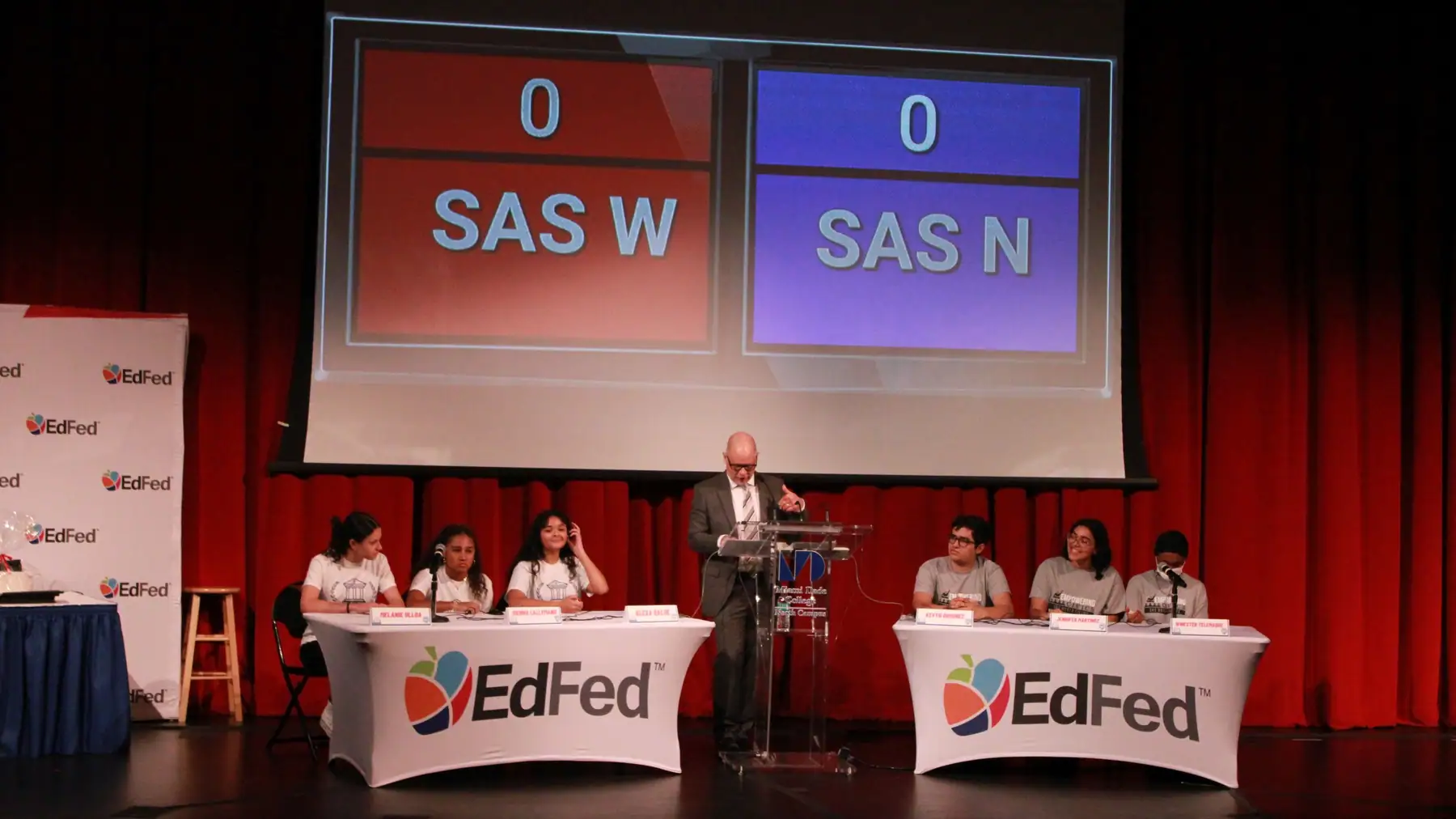
Twenty one schools now train for a civics competition in Miami-Dade. Three years ago it was twelve.
Constitution Day Quest
Since 2022
The Constitution leaves the textbook.
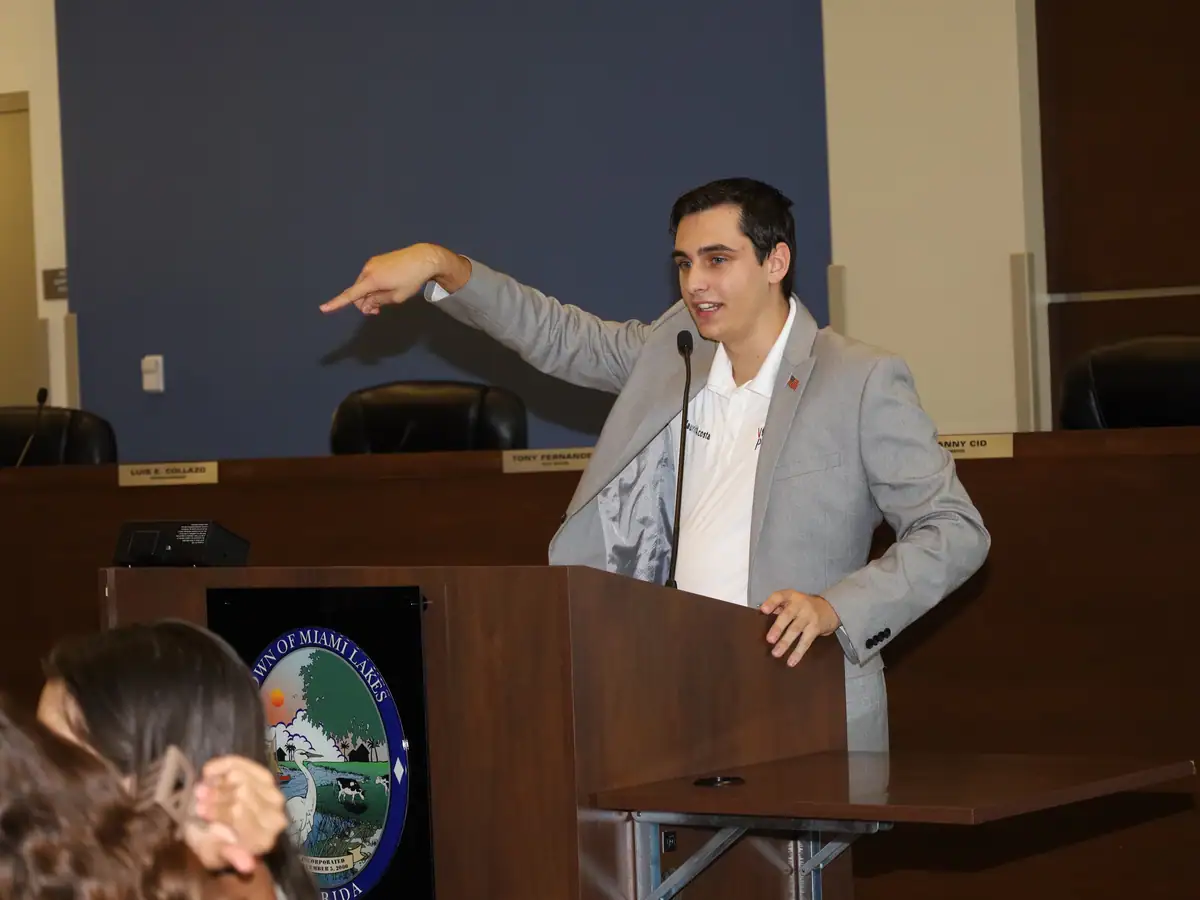
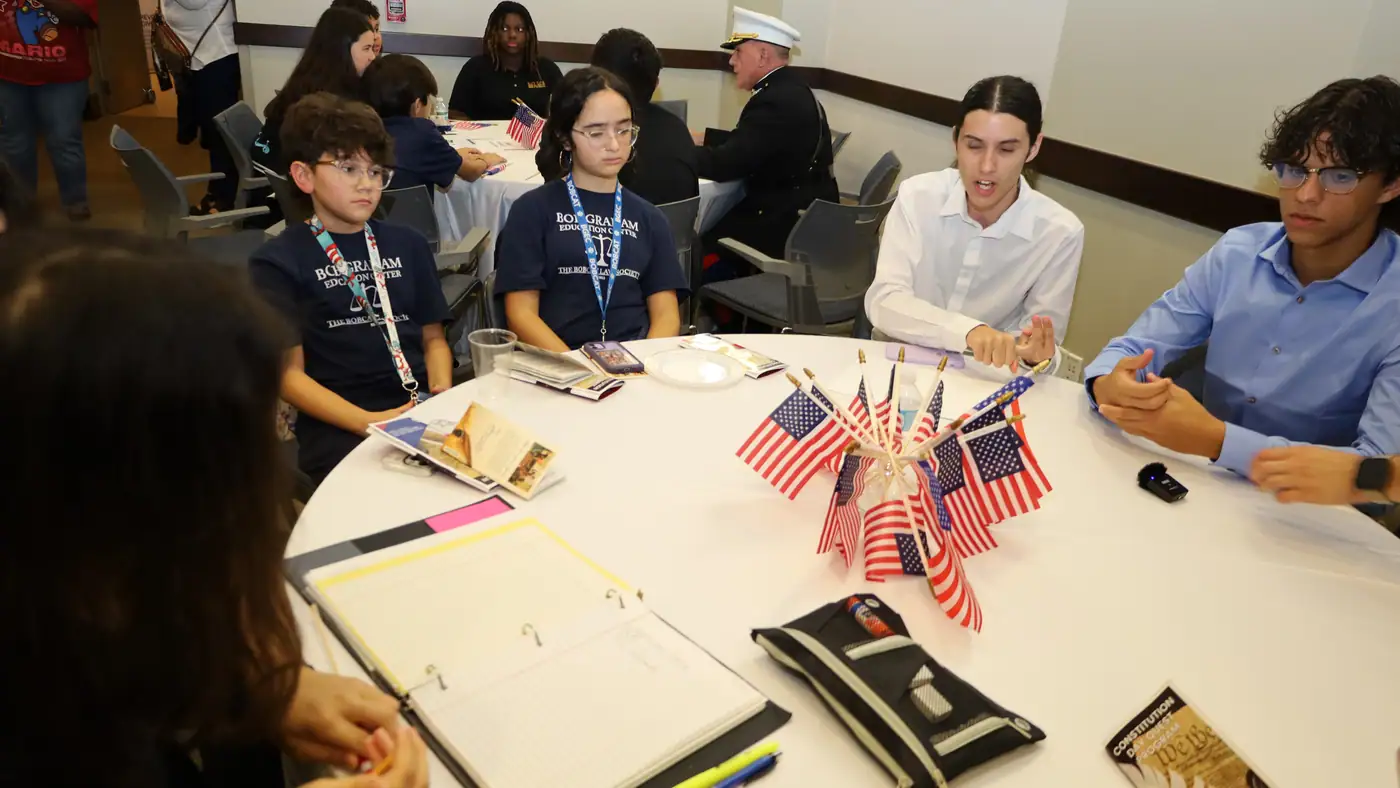
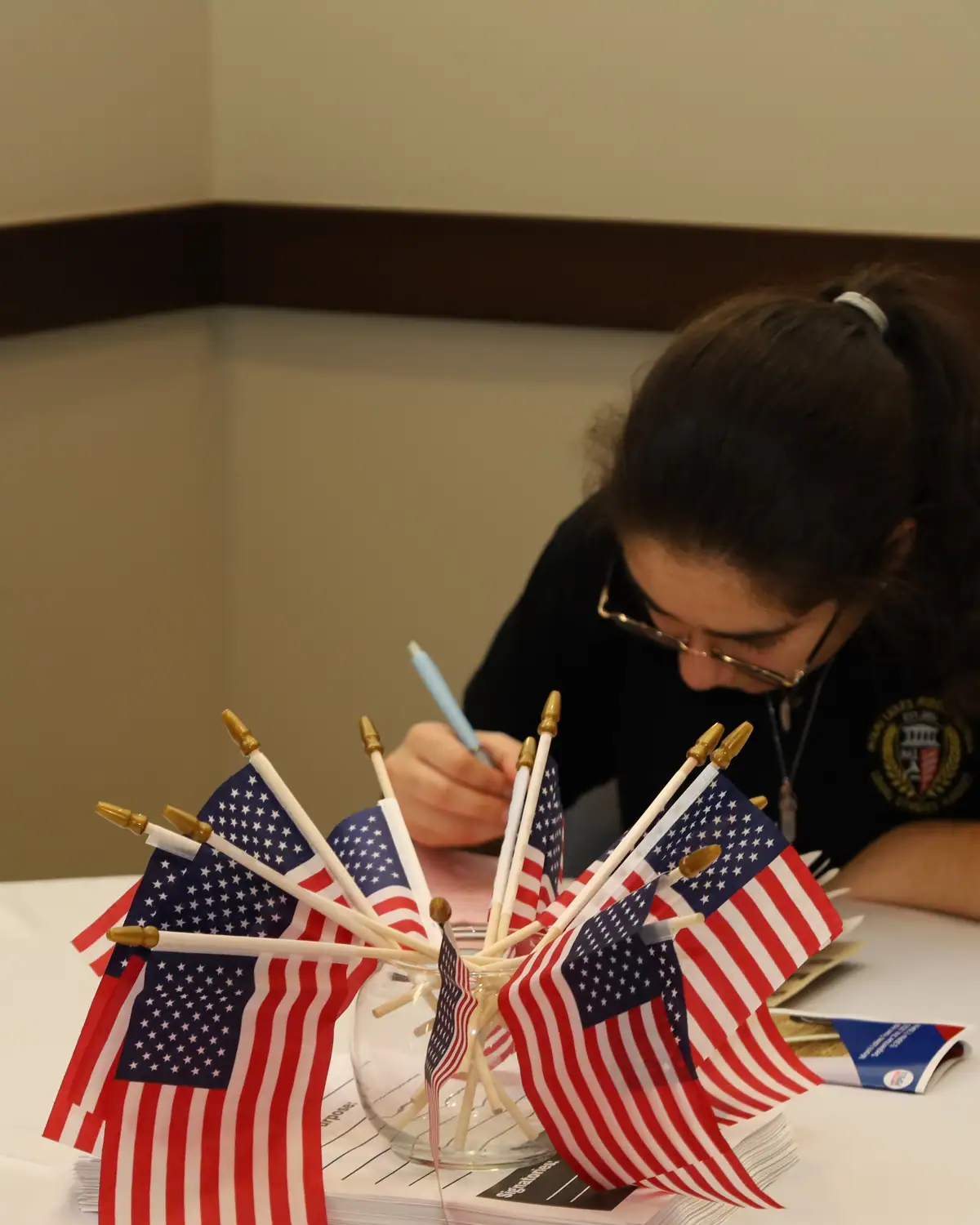
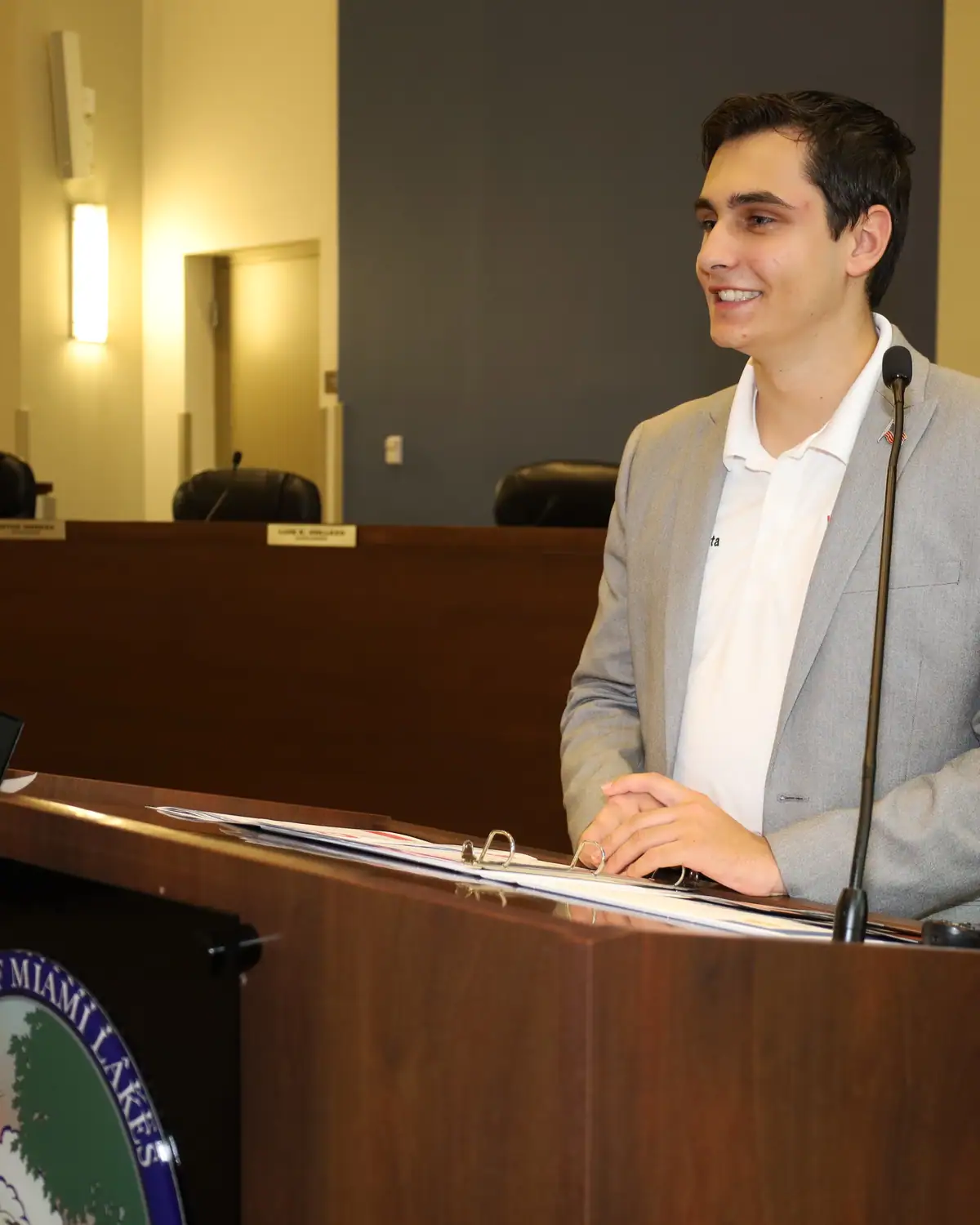
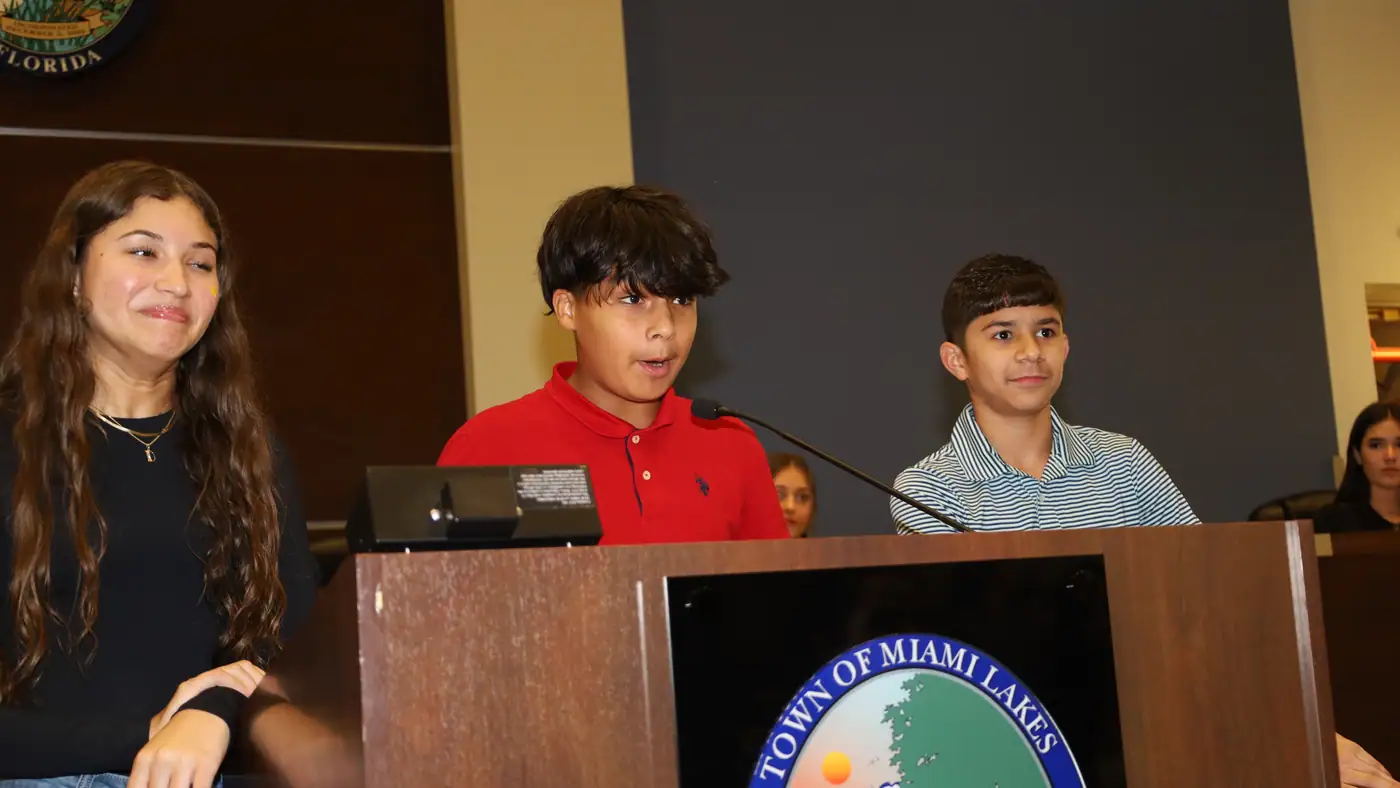
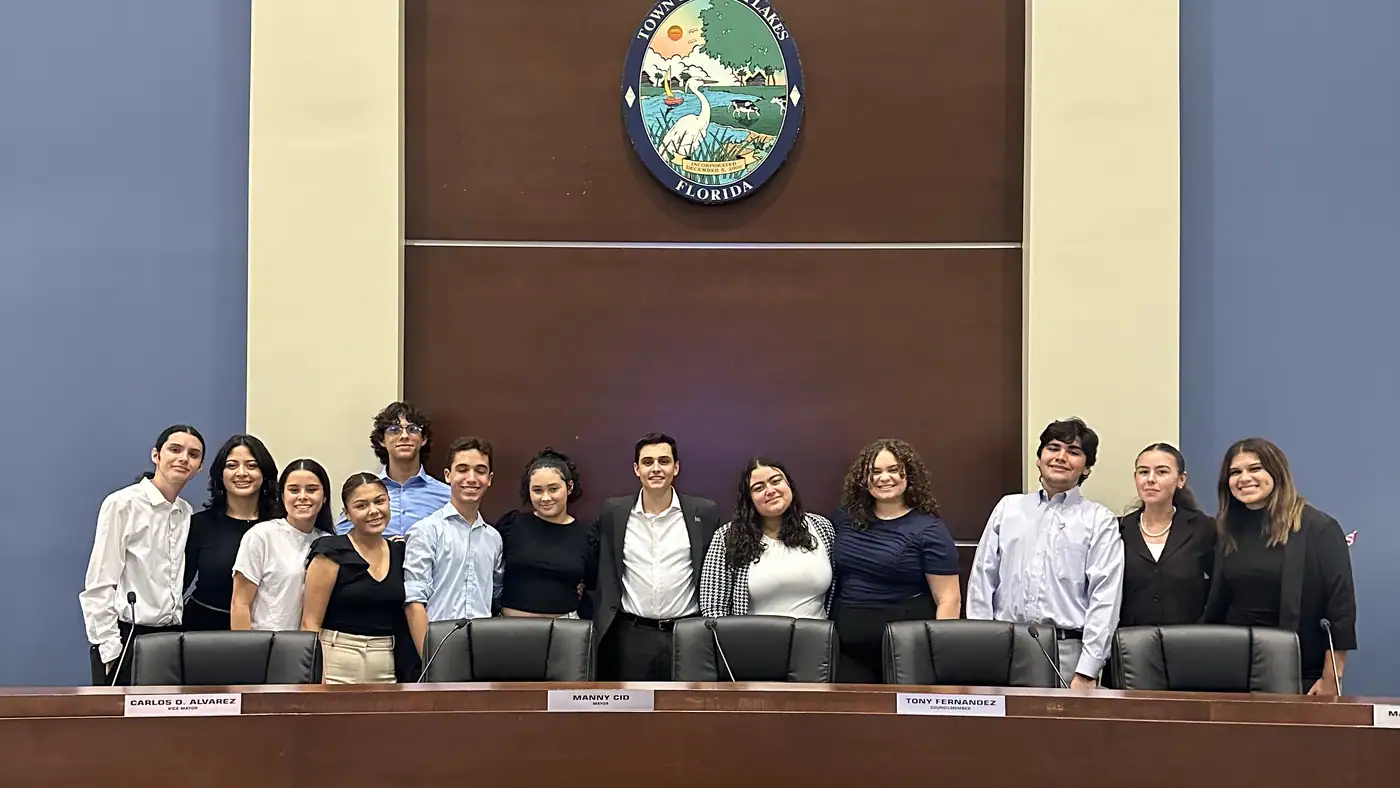
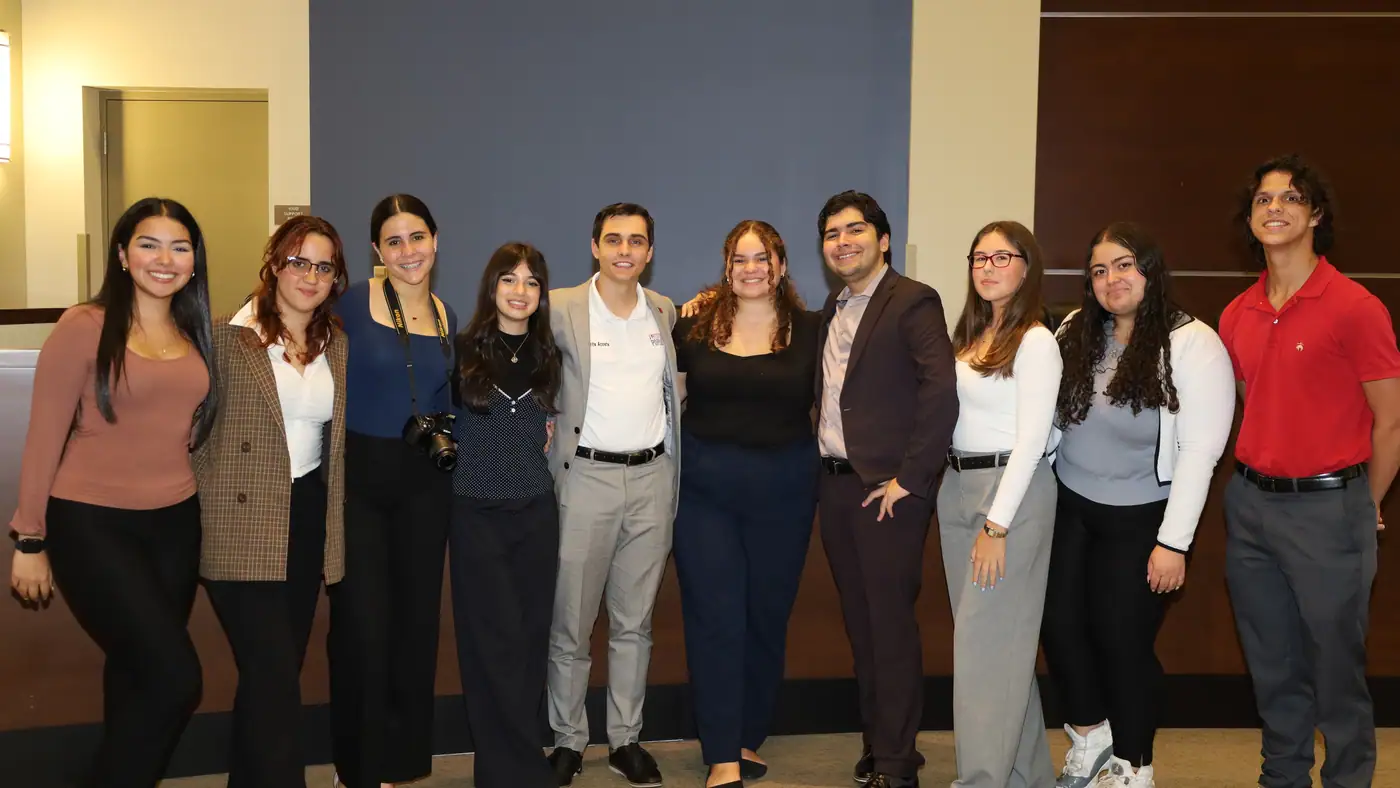
The first program the organization ever ran, held each September inside a municipal chamber. Learning stations, timed challenges and mock proceedings replace the lecture, and more than twenty student volunteers facilitate the day themselves.
Students rotate through stations, argue constitutional questions against other tables under a countdown clock, put questions to guests who work in public service, and take the dais to present what their group decided.
What students leave with. A working understanding of the document that governs them, and the experience of having explained it out loud to a room.
The question
What does the Constitution actually ask of a citizen?
The experience
A municipal chamber converted for a day into a civic classroom.
The work
Station responses, group rulings, mock proceedings and presentations from the dais.
The result
Constitutional knowledge that survives past the test, because students had to use it in front of people.
22%
of eighth graders performed at or above NAEP Proficient in civics in 2022.
Source: NAEP, 2022
Constitutional knowledge lasts longer when students have to interpret it, argue it and apply it.

Civic Knowledge Bowl
Since 2023
Civics, but make it a championship.
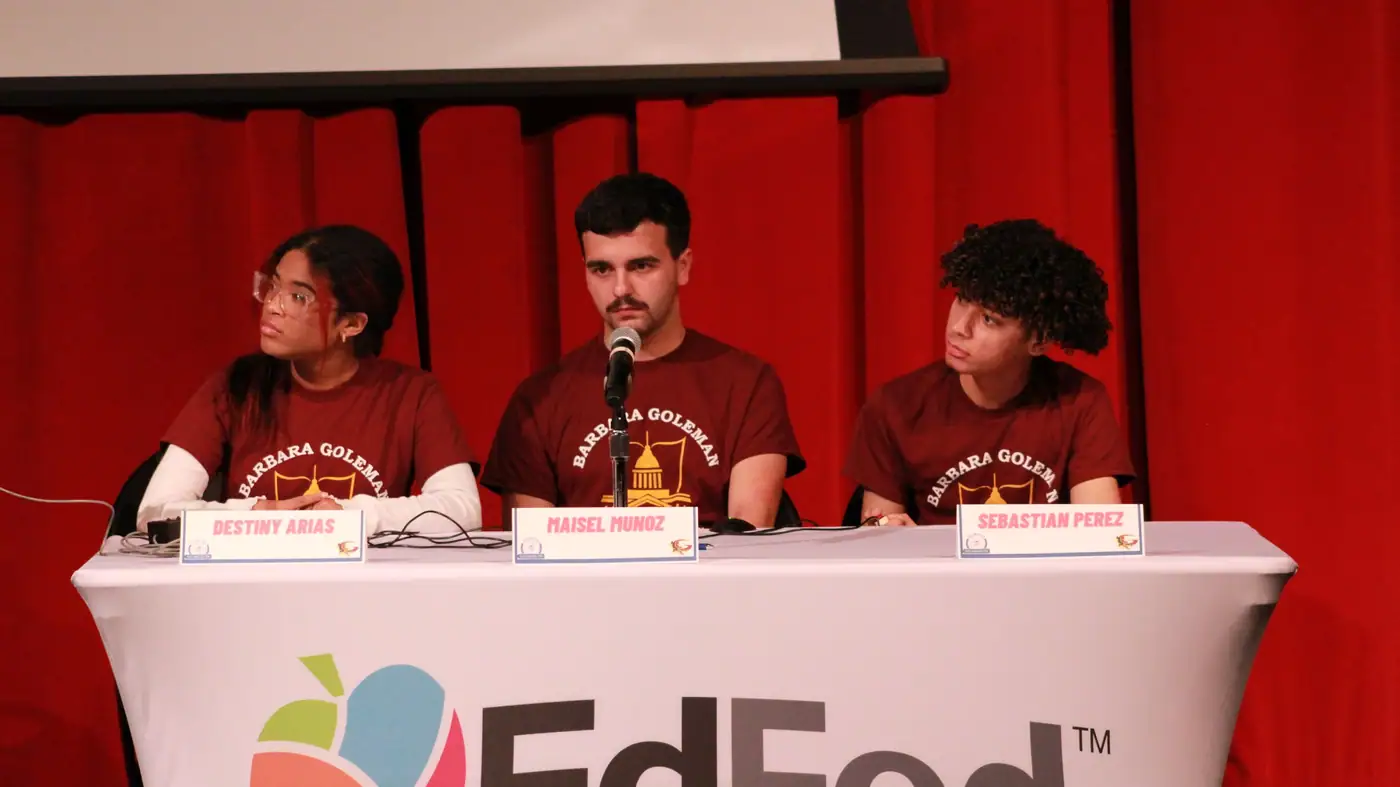
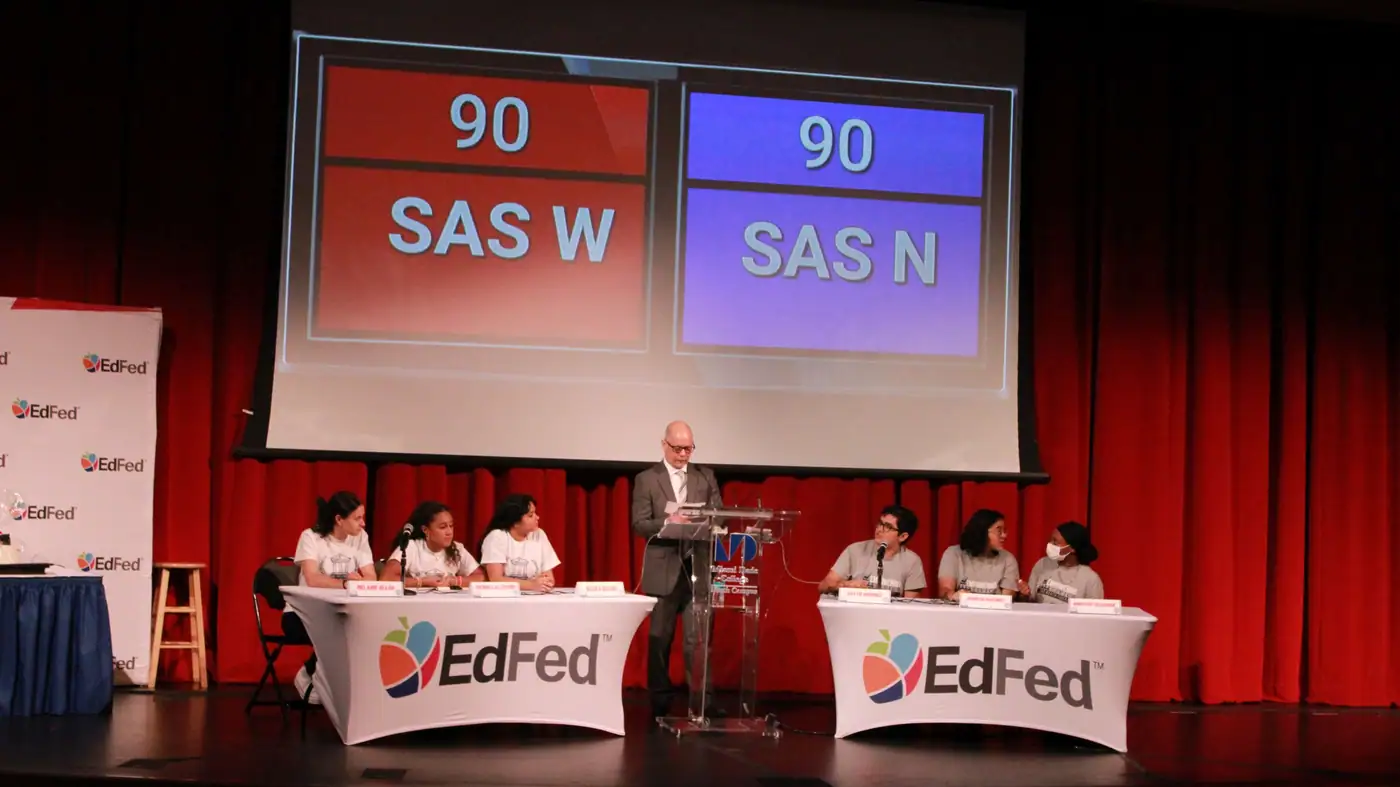
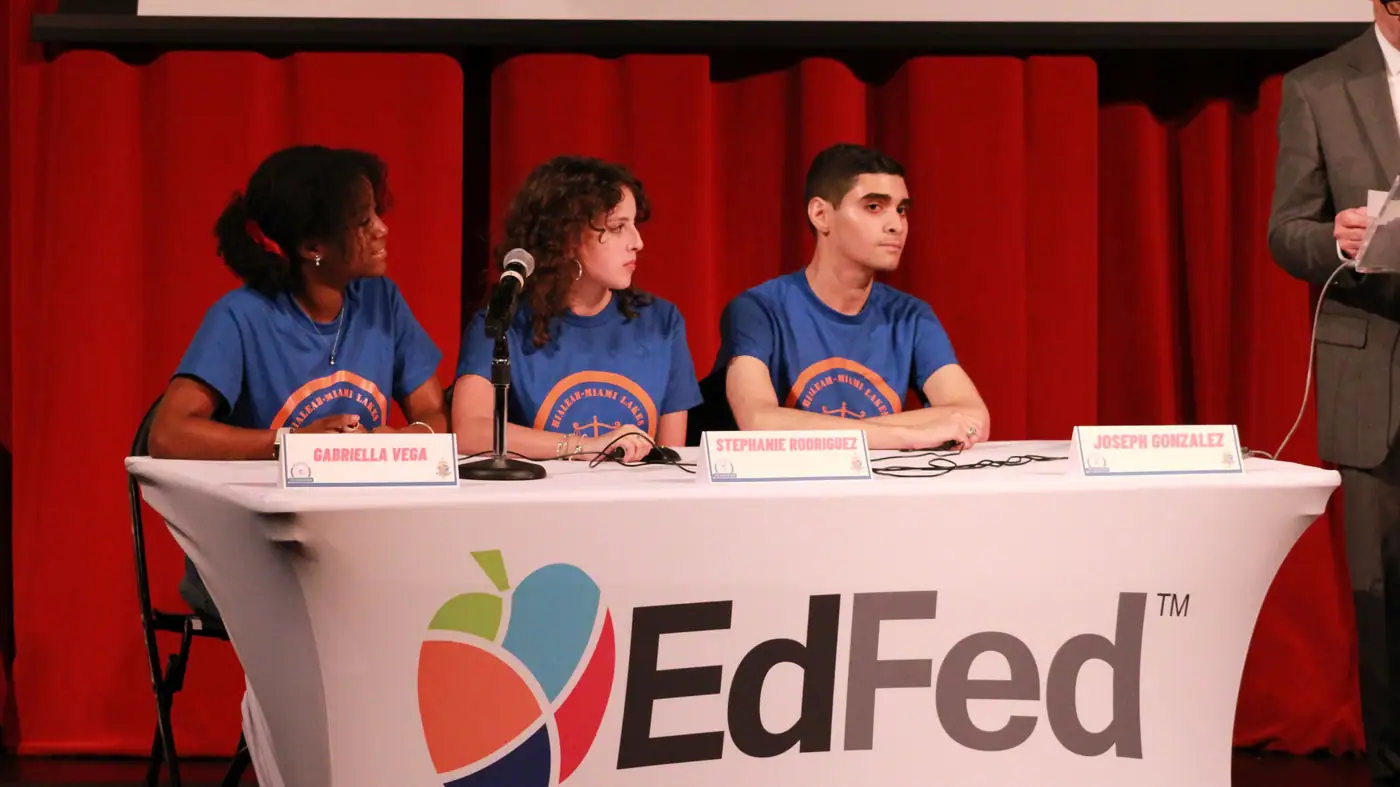
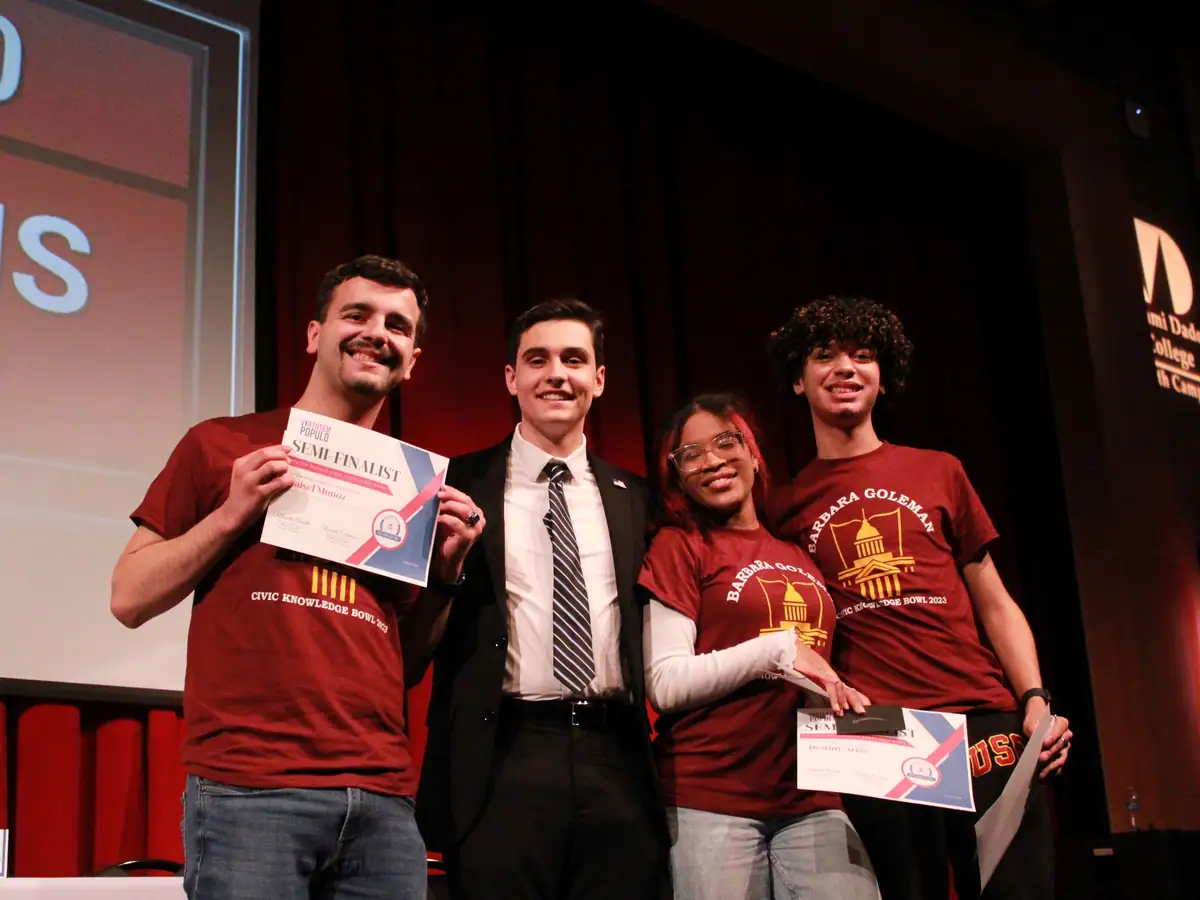
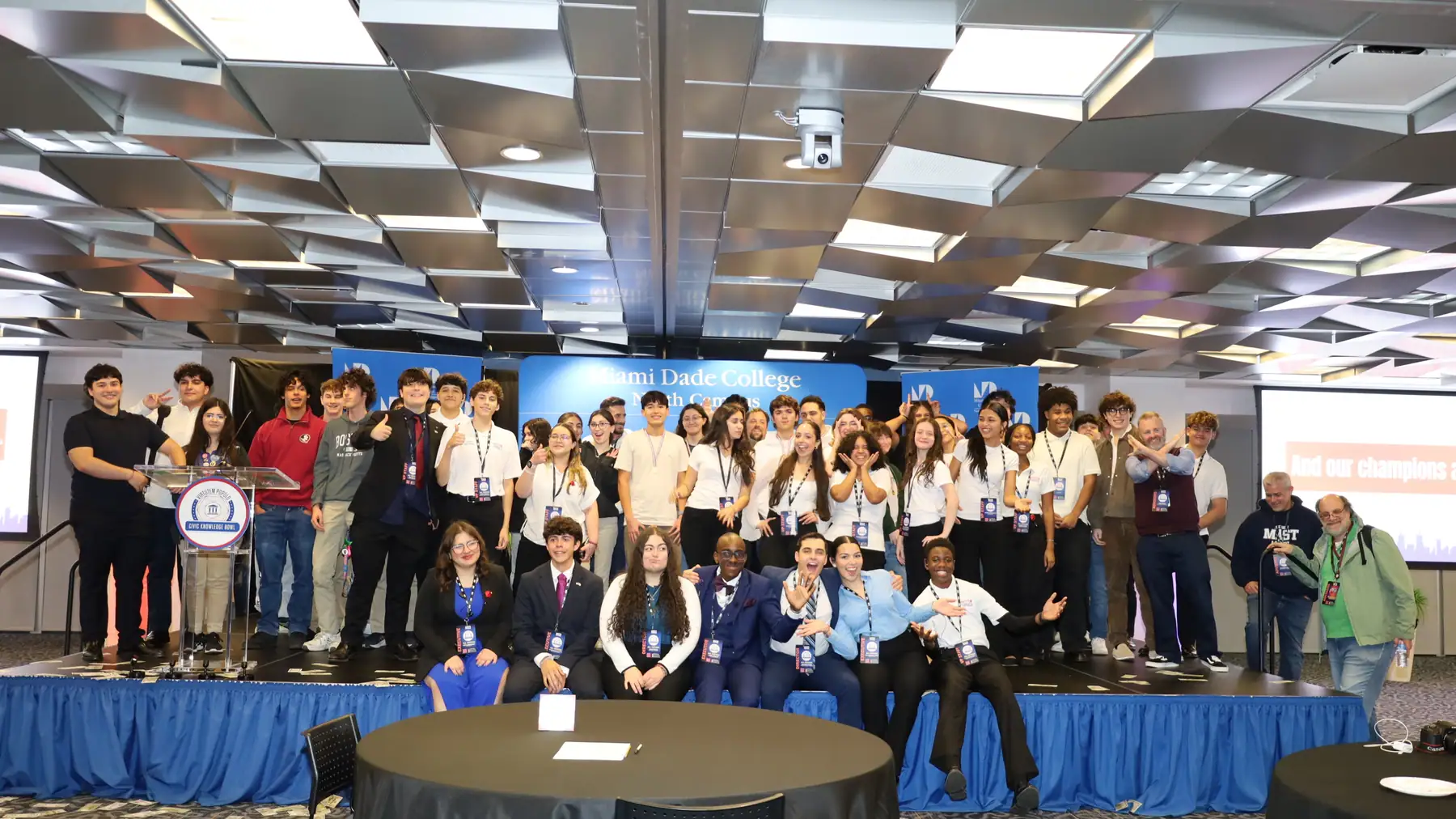
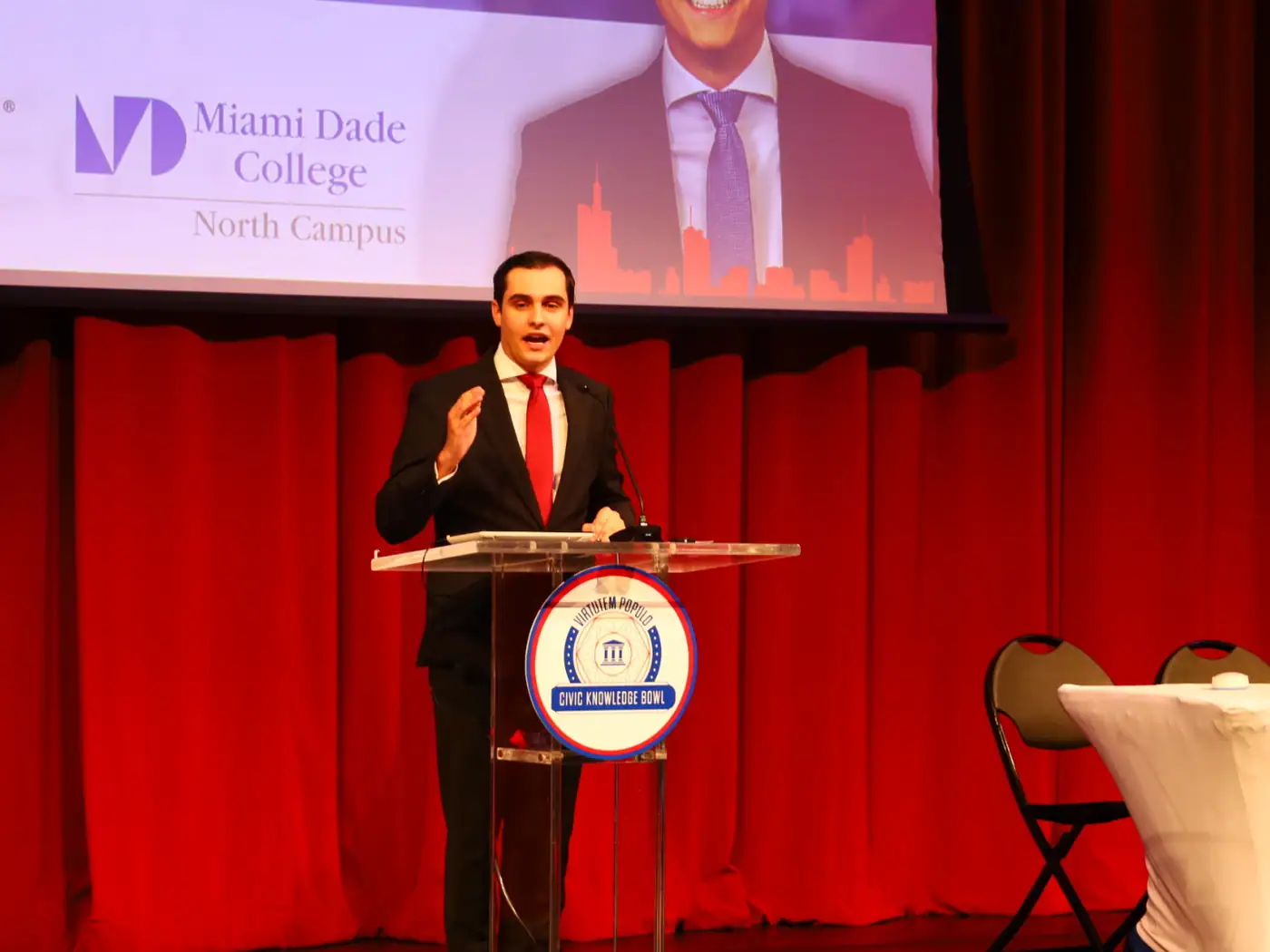
A countywide competition held every February. School teams face each other on United States history, the Constitution and how government works, first in preliminary rounds and then in a finale auditorium.
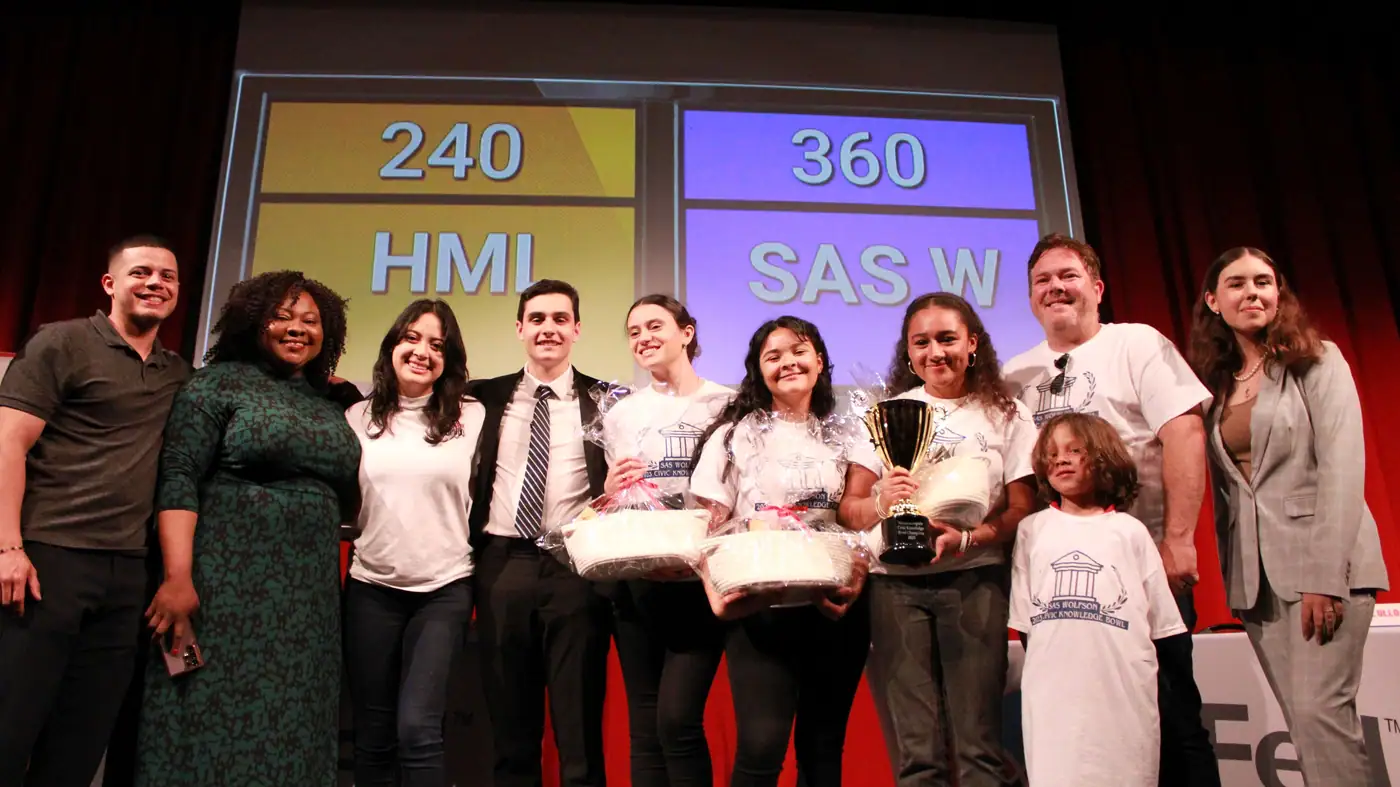
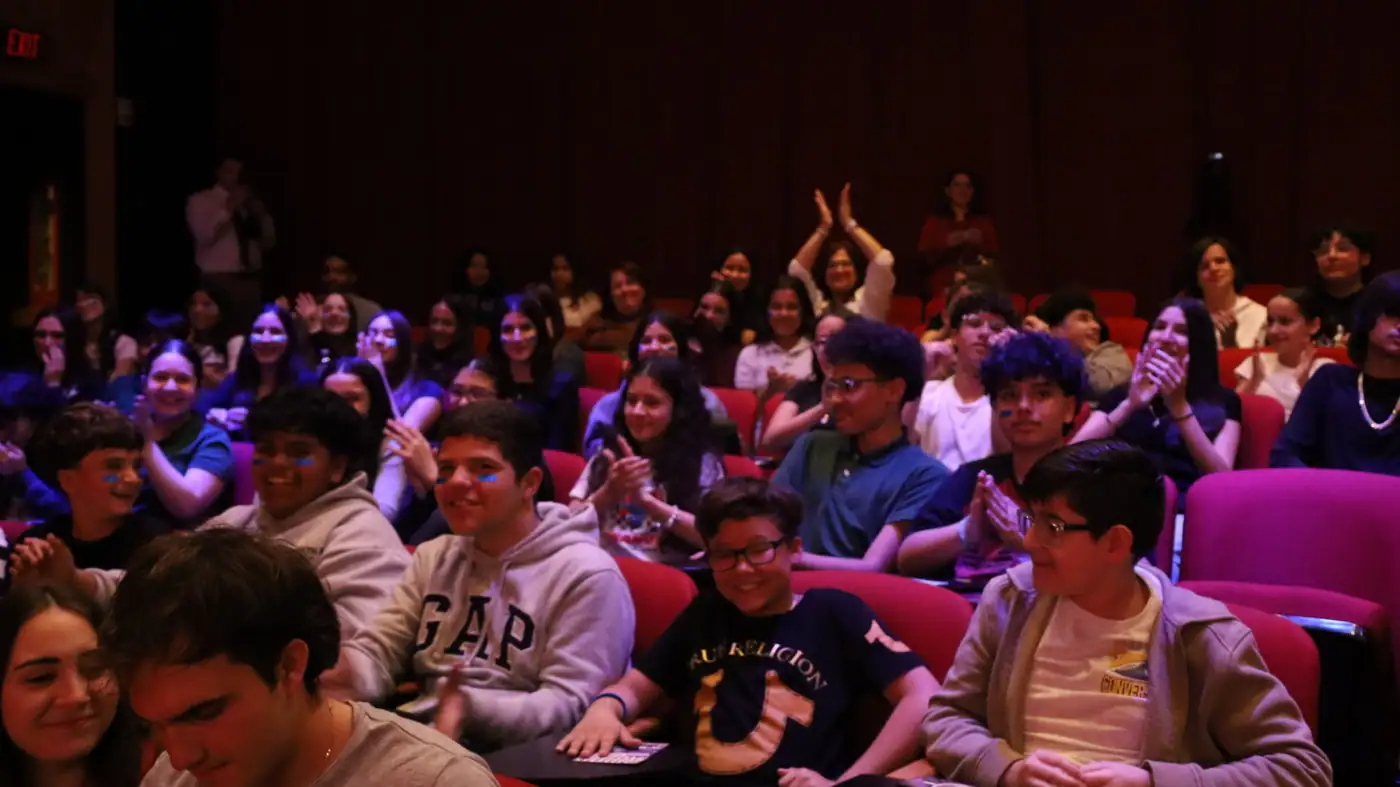
Students study for months with their schools, compete on buzzers under a live scoreboard, defend answers in front of a full house and represent their school by name.
What students leave with. Command of civic content, and the specific confidence of having performed under pressure with a crowd watching.
The question
What happens when a school prepares for civics the way it prepares for a season?
The experience
Preliminary rounds on a college campus, then a finale in a packed auditorium.
The work
Months of team preparation, competition performance and public representation of a school.
The result
Participation grew from twelve schools to twenty one, an increase of seventy five percent.
12 to 21
schools competing in the Civic Knowledge Bowl.
The national problem is civic knowledge. The local answer was to make students compete for it.